This article is for educational purposes only. Always consult your healthcare provider before starting, stopping, or changing GLP-1 medication.
One of the most common mistakes people make on GLP-1 medications is assuming that eating as little as possible will speed up results. With appetite suppressed to the point that 800 calories feels like plenty, it's tempting to just go with it. But this approach undermines the very outcomes you're working toward — and creates risks that last well beyond the treatment period.
This article explains how to set calorie and macro targets that support sustainable fat loss without triggering the muscle loss, nutrient deficiencies, and metabolic adaptation that come with severe undereating.
How GLP-1s Change Your Relationship with Calories
GLP-1 receptor agonists don't change your body's actual caloric needs — they change your desire to meet them. The medication suppresses appetite, slows gastric emptying (so you feel full longer), and reduces reward-driven eating. The result: most patients naturally eat significantly less without feeling deprived.
In the STEP 1 trial of semaglutide, dietary counseling aimed for a ~500 kcal/day deficit from estimated energy needs. In practice, with the medication's appetite suppression, many participants ate even less. The combination of reduced intake plus GLP-1's direct metabolic effects produced the 15% body weight loss outcomes.
But here's the nuance: how much less you eat matters. There is a floor below which reduced intake becomes actively harmful — accelerating muscle loss, disrupting micronutrient status, triggering metabolic adaptation, and potentially causing gallbladder issues.
Setting Your Calorie Target: The Evidence-Based Framework
The goal is a moderate calorie deficit — enough to produce consistent fat loss, not so extreme that your body starts cannibalizing lean tissue and downregulating metabolic rate.
Step 1: Estimate Your Total Daily Energy Expenditure (TDEE)
TDEE is the total calories your body burns in a day, accounting for activity. A simple starting estimate:
- Sedentary (desk job, minimal exercise): Body weight in lbs × 13–14
- Lightly active (1–3 workouts/week): Body weight in lbs × 14–15
- Moderately active (3–5 workouts/week): Body weight in lbs × 15–16
Example: 220 lbs, lightly active → TDEE ≈ 220 × 14.5 ≈ 3,190 kcal
Use our calorie target calculator for a more precise, personalized estimate using the Mifflin-St Jeor equation (the most validated formula for people with overweight or obesity).
Step 2: Set Your Deficit
A deficit of 500–750 kcal/day below TDEE is the evidence-supported sweet spot for most adults during active weight loss. This produces approximately 1–1.5 lbs/week of loss from fat tissue when protein is adequate.
- Example: TDEE 3,190 − 600 = 2,590 kcal/day target
However, because GLP-1 medications significantly suppress intake, many patients eat substantially less than even a 750-kcal deficit — sometimes 1,200–1,500 kcal/day against a TDEE of 3,000+. That's fine as long as: 1. You're meeting your protein target (more on this below) 2. You're not dropping below ~1,000–1,200 kcal consistently
The Minimum Floor: Why 800–1,000 Kcal Is the Danger Zone
Very low calorie diets (VLCDs — typically defined as <800 kcal/day) cause rapid lean mass loss and hormonal disruption. A landmark study in Obesity found that VLCDs reduce resting metabolic rate by 15–25% — a metabolic adaptation that persists even after weight loss stops and makes weight regain highly likely.
More relevant to GLP-1 users: chronic intake below 1,000 kcal/day is difficult to sustain with adequate micronutrients, nearly guarantees inadequate protein, and increases the risk of gallstone formation — a known complication of rapid weight loss that is documented in GLP-1 trials.
A 2023 analysis of STEP and SURMOUNT trial safety data found gallbladder-related adverse events in approximately 2–3% of GLP-1 users — a rate correlated with speed of weight loss, which is itself related to how severely caloric intake was restricted.
If you find that 1,000–1,200 kcal/day feels like more than you want to eat: this is the GLP-1 suppression working too hard. Talk with your provider about whether a dose adjustment is warranted, and work with a registered dietitian to structure meals that ensure minimum adequacy.
Macros: The Right Balance on GLP-1s
Macronutrient distribution matters. The right balance protects muscle, supports energy, and improves long-term adherence.
Protein: The Priority Macro
See our dedicated article on protein strategy for Ozempic and Wegovy users for a full guide. The short version:
- Target 1.2–1.6 g protein per kg of body weight per day
- For a 220-lb (100 kg) person: 120–160 g protein/day
- Eat protein first at every meal
- Best sources: Greek yogurt, cottage cheese, eggs, fish, shrimp, poultry, protein supplements
- Use the protein needs calculator to get your personalized target
Carbohydrates: Don't Eliminate — Moderate
Extremely low carbohydrate intake (<50 g/day) on top of severe caloric restriction and GLP-1-mediated appetite suppression is a common cause of fatigue, brain fog, and electrolyte disturbances in GLP-1 users. Unless specifically advised by your provider (e.g., for diabetes management), aim for 80–150 g carbohydrates/day, prioritizing:
- Fiber-rich sources: Oats, beans, lentils, vegetables, berries
- Lower-glycemic options: Sweet potato, brown rice, quinoa, whole grain bread
- Avoid: Sugar-sweetened beverages, white bread/pasta in large quantities, high-sugar processed snacks — these are calorie-dense, nutrient-poor, and exacerbate GLP-1 GI side effects
Carbohydrates are important for serotonin production, exercise performance, and thyroid hormone conversion. Eliminating them while on an aggressive medication-assisted deficit is an unnecessarily aggressive approach for most people.
Fat: Quality Over Quantity
Fat is satiating and necessary for fat-soluble vitamin absorption, but high-fat meals worsen GLP-1-induced nausea (fat slows gastric emptying independently of the medication). General guidance:
- Target 40–70 g fat/day — enough for hormonal function, not so much that it crowds out protein and carbs or worsens GI symptoms
- Emphasize unsaturated sources: Olive oil, avocado, nuts, fatty fish
- Limit saturated fat to moderate levels, particularly during dose escalation when GI tolerance is lowest
- Avoid very high-fat meals (e.g., deep-fried foods, cream sauces) on injection days
Sample Macro Range for a 220-lb Person Targeting ~1,600 kcal/day
| Macro | Target Range | Kcal Contribution |
|---|---|---|
| Protein | 130–150 g | 520–600 kcal |
| Carbohydrates | 120–150 g | 480–600 kcal |
| Fat | 40–55 g | 360–495 kcal |
| Total | ~1,500–1,700 kcal |
Meal Timing and Frequency: What Works on GLP-1s
GLP-1 medications alter the experience of hunger such that traditional meal schedules may not suit you. Common patterns among people on GLP-1 medications:
- Appetite is highest in the morning and lowest in the evening — front-loading calories earlier in the day aligns with both the medication's effect and circadian metabolic rhythms
- 3 moderate meals work for many; 4–5 smaller meals work better for those with persistent nausea
- "Eating by the clock" — setting scheduled meal times regardless of hunger — helps prevent unintentional undereating when appetite is very suppressed
- Skipping breakfast while on GLP-1s can lead to inadequate protein and caloric intake; even a small protein-first breakfast is beneficial
The "Protein First" Rule in Practice
At every meal, eat your protein source first, before vegetables, starch, or anything else. If you get full partway through the meal — as many GLP-1 users do — at least the most critical nutrient has been consumed. This simple strategy can prevent the slow drift toward protein deficiency that often goes unnoticed until fatigue, hair loss, and muscle weakness emerge weeks or months later.
Foods That Typically Work Well on GLP-1s
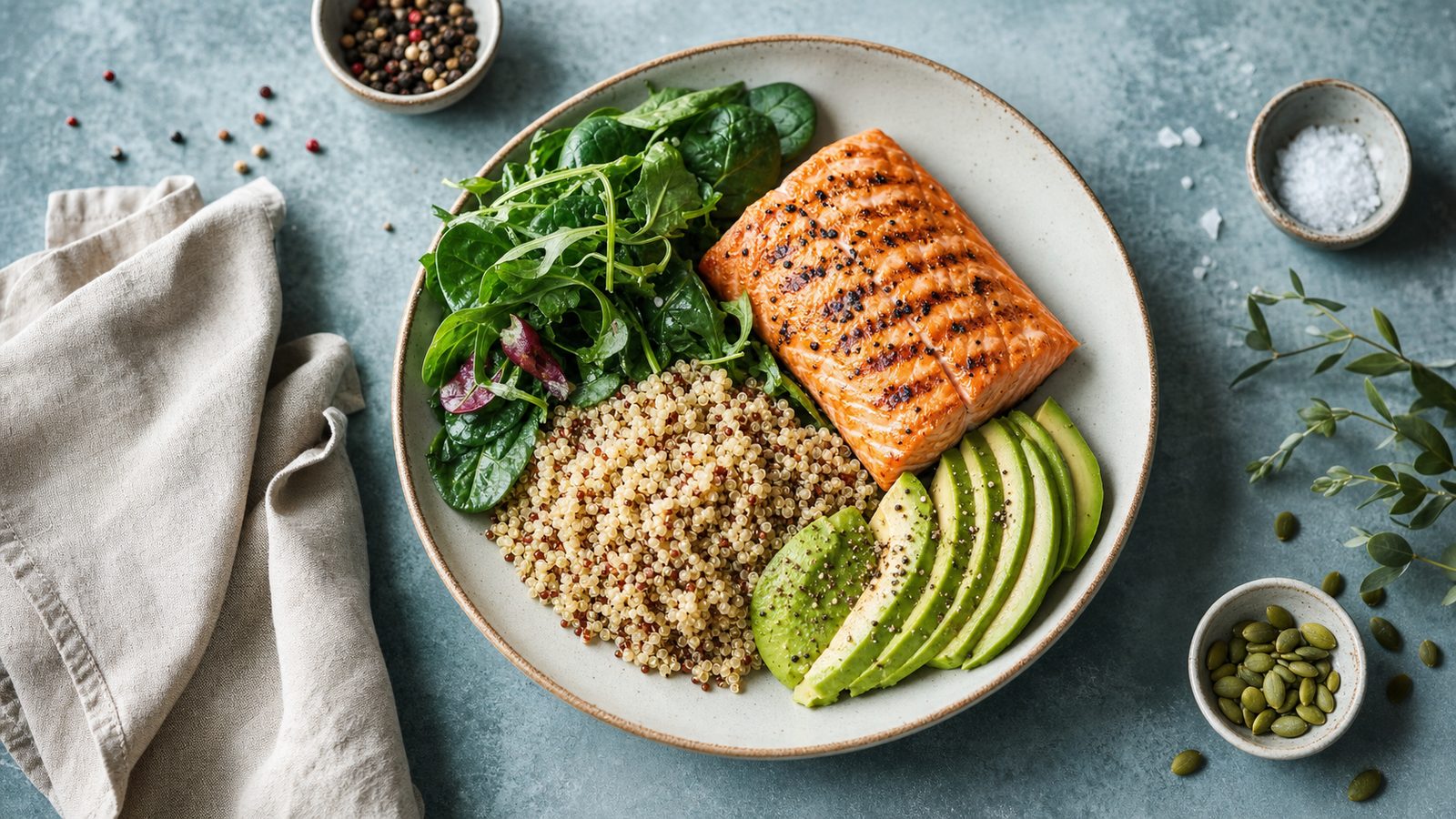
Easy to eat, high nutrient density: - Eggs (scrambled, soft-boiled) - Greek yogurt (plain, non-fat) - Cottage cheese - Soft fish (salmon, cod, tilapia) - Pureed soups - Smoothies with protein powder - Oatmeal - Avocado on toast
Often poorly tolerated, especially during dose escalation: - Very fatty meats (bacon, sausage, prime rib) - Fried foods - Spicy dishes - High-fiber raw vegetables in large quantities - Carbonated beverages - Alcohol (also calorie-dense with no nutritional value) - Large portions of any food
Warning Signs of Nutritional Deficiency
Chronic undereating on GLP-1s can cause subtle but serious nutritional problems. Watch for:
| Symptom | Possible Deficiency |
|---|---|
| Persistent fatigue | Iron, B12, or total caloric deficit |
| Hair thinning/shedding (telogen effluvium) | Protein deficiency, zinc, biotin |
| Muscle cramps | Magnesium, potassium, calcium |
| Brain fog | Total caloric deficit, B vitamins |
| Poor wound healing | Zinc, vitamin C |
| Cold intolerance | Iron, thyroid (separate issue worth testing) |
Hair loss (telogen effluvium) is particularly common in GLP-1 users — it is primarily a response to the physiological stress of rapid weight loss and protein deficiency, not a direct drug side effect. It typically begins 2–4 months after the weight loss period and resolves with adequate protein intake.
Work with your provider to get baseline labs (CBC, comprehensive metabolic panel, iron studies, B12, vitamin D) and recheck at 3–6 months. Consider a comprehensive multivitamin as insurance.
Independent Analysis: Nutrition on GLP-1s Is Not Just Calorie Reduction
Three nutrition observations from combining the STEP and SURMOUNT body composition data with protein metabolism literature that go beyond the standard "eat less" advice:
1. The rate of weight loss on GLP-1s is fast enough to matter for lean mass
The STEP 1 trial reported that participants lost an average of 14.9% of body weight at 68 weeks. What the headline did not emphasize is that the body composition substudies found approximately 40% of total mass lost was lean mass — in the absence of resistance training. For a 250-pound person losing 37 pounds, that is roughly 15 pounds of muscle gone. This is not unique to GLP-1s; it is a general feature of rapid caloric restriction at any age. But the speed of loss on GLP-1 medications, combined with reduced appetite for protein-dense foods (many patients report meat aversion), makes this worse than slower dietary-only approaches. The practical implication is not to slow down the medication — it is to be intentional about protein and resistance training from day one, not after you notice you are weaker.
2. Ad-libitum eating on GLP-1s frequently under-delivers protein even when total intake looks adequate on paper
A 2023 analysis in Obesity found that GLP-1 users eating ad libitum (without specific macro guidance) tended to reduce protein disproportionately — specifically, they reduced meat, poultry, and legume intake more than refined carbohydrates. The mechanism is likely that high-protein foods have more pronounced early satiation signals and often higher GI-discomfort when eaten quickly, which GLP-1 patients already experience. The result is that protein as a percentage of calories may look normal (15–20%) while absolute grams drop sharply. At 1,000 kcal/day, 20% protein is only 50 grams — well below any lean-mass-protective threshold. Tracking absolute grams of protein, not percentage of calories, is the relevant measure.
3. Fiber collapse is measurable and has a mechanism that compounds GLP-1 constipation
GLP-1 receptor agonists slow colonic motility independently of fiber intake. When dietary fiber simultaneously falls — because vegetables and legumes are among the first foods reduced during GLP-1 appetite suppression — two constipation pathways stack. The 2022 GLP-1 GI tolerability review in Therapeutic Advances in Gastroenterology identifies low-residue eating as an independent risk factor for constipation severity in GLP-1 users. In practice, patients who maintain 25–35 g/day of dietary fiber report meaningfully less constipation — and also report better satiety between doses. This is achievable even at 1,000–1,200 kcal/day if fiber-dense foods (non-starchy vegetables, chia seeds, legumes in small quantities) are deliberately incorporated rather than left to appetite.
What this means for planning meals on a GLP-1
The three metrics worth actively monitoring are: (1) absolute daily protein in grams — aim for at least 100–120 g for most adults, more if doing resistance training; (2) dietary fiber — a minimum of 25 g/day regardless of total calorie intake; (3) total calorie floor — if appetite suppression is pushing you below 800 kcal/day consistently, discuss with your prescriber whether the dose is too high for your current phase. These are not perfectionistic goals — they are the three levers that most directly affect body composition outcomes and side-effect burden during GLP-1-assisted weight loss. See our protein strategy guide for detailed target calculations.
Frequently Asked Questions
How many calories should I eat per day on a GLP-1 medication?
There is no single target — the drug adjusts your appetite, and total intake varies by person, dose, and phase of treatment. A practical floor is 800 kcal/day: eating consistently below this without medical supervision risks lean mass loss, micronutrient deficiency, and worsening of adaptive thermogenesis. Most people eating ad libitum on GLP-1 maintenance doses land between 1,200 and 1,800 kcal/day, which is an appropriate range for gradual sustained loss.
How much protein do I need on a GLP-1?
Most clinicians working in obesity medicine recommend 1.2–1.6 g per kg of body weight per day as a minimum during active weight loss on GLP-1 medications. For older adults (over 65) or those doing resistance training, 1.6–2.0 g/kg is commonly recommended to offset accelerated lean mass loss. In practical terms, a 200-pound (91 kg) adult should target 110–145 g of protein per day.
Why do I not want to eat meat or high-protein foods on my GLP-1?
Protein-dense foods, particularly red meat and poultry, have stronger early satiation signals than refined carbohydrates — they fill you up faster. GLP-1 medications amplify these signals, making protein-rich meals feel heavy or nauseating before you have eaten enough. This is a common experience, not a sign of intolerance. Strategies that help include eating protein first, using softer protein sources (eggs, Greek yogurt, cottage cheese, fish), and splitting protein across more frequent smaller meals.
Should I follow a low-carb diet on a GLP-1?
There is no published trial comparing low-carb to moderate-carb eating specifically during GLP-1 treatment. General principles suggest that carbohydrate quality matters more than quantity: ultra-processed carbohydrates blunt satiety and can undermine the appetite suppression the medication provides. A moderate approach — prioritizing protein and fiber, reducing refined carbohydrates, and not eliminating complex carbohydrates entirely — is consistent with the dietary counseling used in STEP and SURMOUNT trials.
What happens if I eat too little on a GLP-1?
Consistently eating below 800 kcal/day without medical supervision accelerates lean mass loss, risks deficiencies in B12, iron, zinc, and calcium, and can worsen adaptive thermogenesis — meaning your resting calorie burn decreases more than it would with more moderate restriction. Some patients also report increased fatigue, hair loss (telogen effluvium, triggered by calorie deficit), and electrolyte imbalance. If your appetite suppression is this severe, discuss dose timing and potentially reducing your dose with your prescriber.
Does alcohol interact with GLP-1 medications?
No direct pharmacokinetic interaction between alcohol and GLP-1 medications is established, but two practical concerns exist. First, alcohol provides empty calories that can displace protein and fiber in an already calorie-restricted diet. Second, some GLP-1 users report decreased alcohol tolerance and reduced cravings — an effect that has been studied mechanistically and may relate to GLP-1 receptor activity in the mesolimbic reward system. Alcohol also increases gastric irritation, compounding GLP-1-related nausea.
Are fiber supplements useful on a GLP-1?
Yes, when dietary fiber is insufficient. Psyllium husk (Metamucil) and inulin-based supplements are the best-studied options for constipation management in GLP-1 users. Start low and increase gradually — adding 5 g/day until reaching a target of 25–35 g/day total from food and supplement combined. Taking fiber supplements without adequate water will worsen constipation rather than improve it.
Sources
- Wilding JPH, et al. "Once-Weekly Semaglutide in Adults with Overweight or Obesity (STEP 1)." NEJM, 2021. https://www.nejm.org/doi/full/10.1056/NEJMoa2032183
- Müller MJ, et al. "Metabolic adaptation to caloric restriction and subsequent refeeding." Obesity, 2015. https://onlinelibrary.wiley.com/doi/10.1002/oby.22250
- Lean MEJ, et al. "Dietary counselling during GLP-1 therapy." Diabetes, Obesity and Metabolism, 2023. https://dom-pubs.onlinelibrary.wiley.com/doi/10.1111/dom.15024
- Paddon-Jones D, et al. "Protein and healthy aging." American Journal of Clinical Nutrition, 2015. https://academic.oup.com/ajcn/article/101/6/1339S/4564409
- Academy of Nutrition and Dietetics. "Position of the Academy: Interventions for the Treatment of Overweight and Obesity in Adults." JAND, 2022. https://jandonline.org/article/S2212-2672(22)00511-0/fulltext
- Stokes T, et al. "Dietary Protein for Muscle Mass During Weight Loss." Nutrients, 2018. https://www.mdpi.com/2072-6643/10/2/180